Home battery storage explained: Backup power, solar and outages
Quick answer: Home battery storage saves electricity for later use. When paired with solar, a battery can store extra solar energy and help power selected parts of your home during an outage, depending on the system design.
Most homeowners first consider solar because they want lower electric bills. Many eventually discover a second benefit: greater energy independence.
That is where battery storage enters the conversation.
A home battery can store electricity and provide backup power when utility service is interrupted. For homeowners concerned about grid reliability, severe weather or rising energy costs, battery storage is becoming a bigger part of the solar conversation.
What is home battery storage?
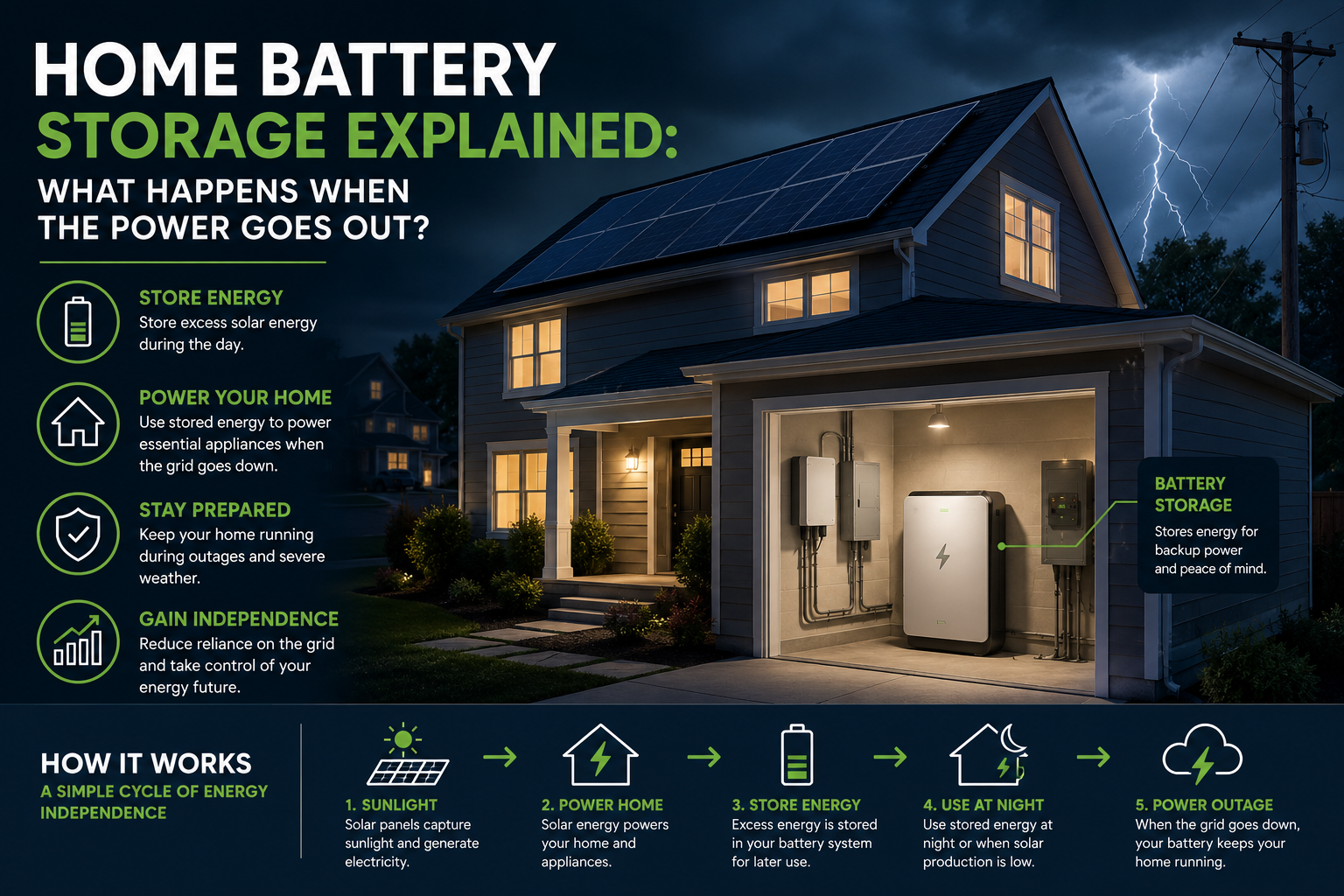
A home battery stores electricity so your home can use it later.
For homeowners with solar, battery storage can save excess solar energy that is produced during the day. That stored energy may then be used at night, during an outage or when your home needs additional power.
Simple way to think about it:
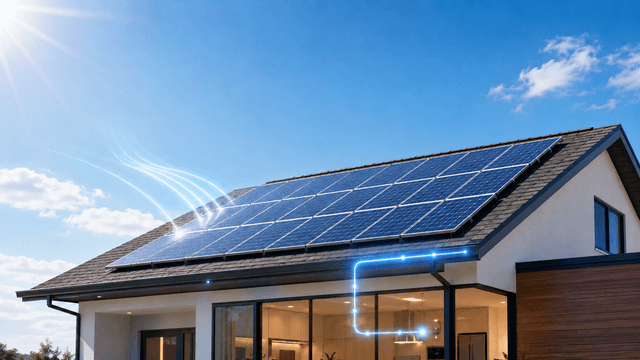
1. Solar panels produce electricity.
2. Your home uses solar power first.
3. Extra electricity can charge the battery.
4. Stored energy can be used later.
5. During some outages, the battery can help power selected home essentials.
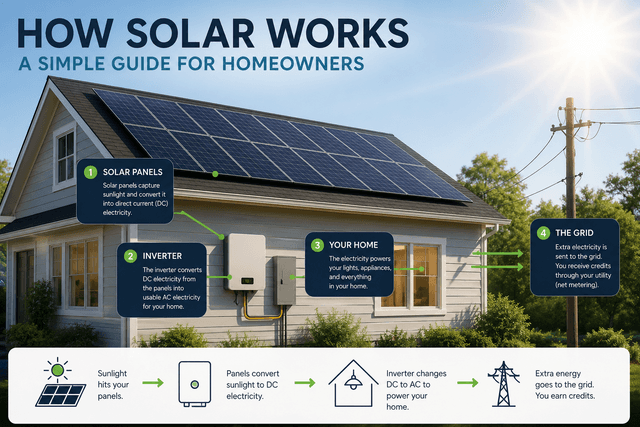
If you are still learning the basics, our guide on how solar works explains how panels, inverters, the grid and your home work together.
What happens during a power outage?
Without battery storage, most grid-connected solar systems automatically shut down during a utility outage.
That surprises many homeowners, but the reason is safety. Solar systems are designed to stop sending power to the grid during an outage so utility workers can safely repair power lines.
With battery storage, selected parts of your home may continue operating when the grid goes down, depending on your system setup.
Refrigerator
Helps protect food during an outage.
Internet equipment
Can help keep communication available.
Lighting
Can keep key areas of the home usable.
Essential outlets
Can support phones, devices or selected appliances.
The goal is not always to power the entire home indefinitely. For many homeowners, the goal is keeping the most important parts of the home running during an outage.
Why most solar systems shut off during outages
Solar panels can produce electricity when the sun is shining, but a standard grid-connected solar system is tied to the utility grid.
When the grid goes down, the system typically shuts off automatically. This prevents electricity from flowing back onto power lines while utility crews are working.
Important: Solar panels alone usually do not provide backup power during an outage. Battery storage is what allows a solar system to store energy and power selected circuits when the grid is unavailable.
This is one of the main reasons homeowners who care about backup power often ask about solar and battery storage together.
How solar and battery storage work together
Solar and batteries serve different roles.
Solar panels produce electricity. A battery stores electricity. Together, they can help your home use more of the energy your system produces and reduce dependence on utility power.
| System component | What it does |
|---|---|
| Solar panels | Generate electricity from sunlight. |
| Inverter | Converts solar energy into electricity your home can use. |
| Battery | Stores electricity for later use. |
| Backup panel or selected circuits | Determines which parts of the home can run during an outage. |
If your system produces more power than your home uses during the day, that energy may go to the grid or charge a battery, depending on your setup and utility program.
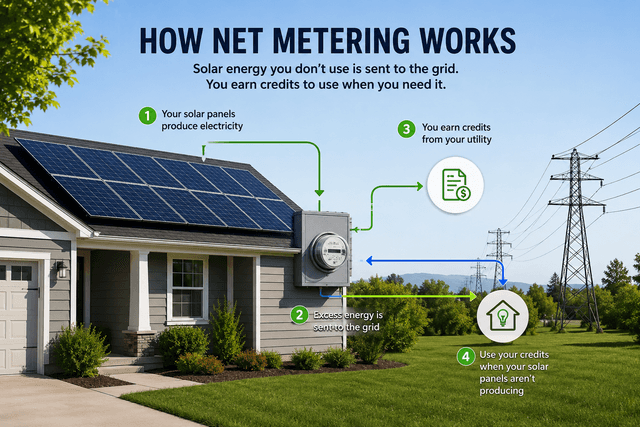
Our guide on what net metering is explains how excess solar energy and utility credits work when power is sent back to the grid.
Can batteries work without solar?
Yes. Some battery systems can charge from the utility grid.
However, many homeowners choose to pair batteries with solar because solar gives the battery a source of power to recharge from during normal operation.
Without solar, the battery depends on grid power to charge. With solar, the system can use sunlight to help recharge the battery when conditions allow.
Battery without solar
Can provide backup power if charged, but usually depends on the grid for recharging.
Battery with solar
Can store solar energy and may recharge from solar production when sunlight is available.
What can a home battery power?
The answer depends on the battery size, system design and how much electricity your home is using during the outage.
Many homeowners prioritize essentials rather than trying to power the entire home.
| Common backup priority | Why it matters |
|---|---|
| Refrigeration | Helps protect food and medication. |
| Internet and phones | Supports communication during outages. |
| Lighting | Keeps the home safer and easier to move through. |
| Medical devices | Can be critical for households with health needs. |
| Selected outlets | Allows limited use of important devices and small appliances. |
A battery design should match the homeowner’s priorities. A household that wants refrigeration and internet backup may need a different setup than a household trying to support larger appliances.
Why are more homeowners considering batteries?
Battery storage is becoming more relevant because homeowners are thinking differently about electricity.
It is no longer just about this month’s utility bill. More homeowners are thinking about outages, reliability and long-term control.
Severe weather
Storms, hurricanes, heat waves and winter weather can affect grid reliability.
Rising energy costs
Homeowners are looking for more control over how they use and store electricity.
Backup power
Batteries can provide an alternative to relying only on the grid during outages.
Energy independence
Battery storage can help homeowners use more of the power they generate.
If rising utility costs are part of your concern, our article on why your electric bill keeps going up explains the larger forces affecting energy prices.
Are batteries worth it?
Battery storage may be worth considering if backup power, outage protection or energy independence are important to you.
For homeowners focused only on monthly savings, it may make sense to first evaluate the solar system itself, then decide whether battery storage should be added.
Battery storage may make sense if you:
- Experience frequent outages
- Are concerned about grid reliability
- Want backup power without relying only on a generator
- Want to store more of the solar energy your system produces
- Have essential devices or appliances you want to keep running
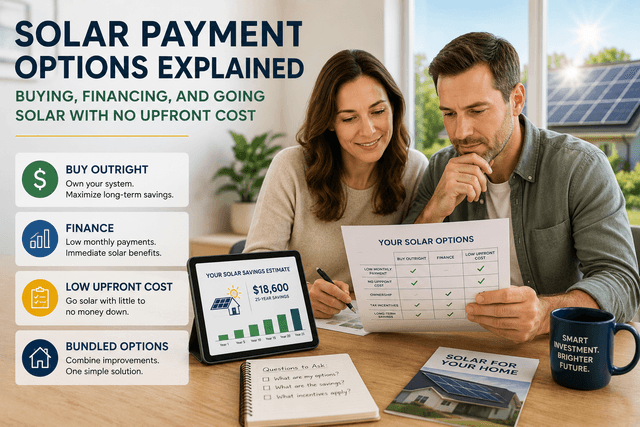
If cost is your main question, start with our guide on how much Trinity Solar costs and our explanation of solar payment options.
Solar, batteries and the future of home energy
The conversation around home energy is changing.
Homeowners are increasingly evaluating electricity through a broader lens:
- What will utility costs look like over time?
- How reliable is the grid in my area?
- What happens during an outage?
- How much control do I want over my home’s energy?
Solar often begins the conversation. Battery storage is frequently the next step.
Together, solar and batteries can give homeowners more control over how their home is powered, how energy is stored and how prepared they are for outages.
The real question is not just “Do I need a battery?”
The better question is what you want your home energy system to do. If backup power, resilience and energy independence matter to you, battery storage may be worth exploring.
Continue learning
If you are comparing solar, batteries and long-term energy planning, these guides are a good next step: