How solar works: A simple guide for homeowners
Quick answer: Solar panels turn sunlight into electricity for your home. Your home uses that solar power first, and if your system produces more electricity than you need, the extra power may be sent to the grid or stored in a battery depending on your setup.
Most homeowners know solar can help reduce electric bills.
What many do not understand is how the system actually works once it is installed.
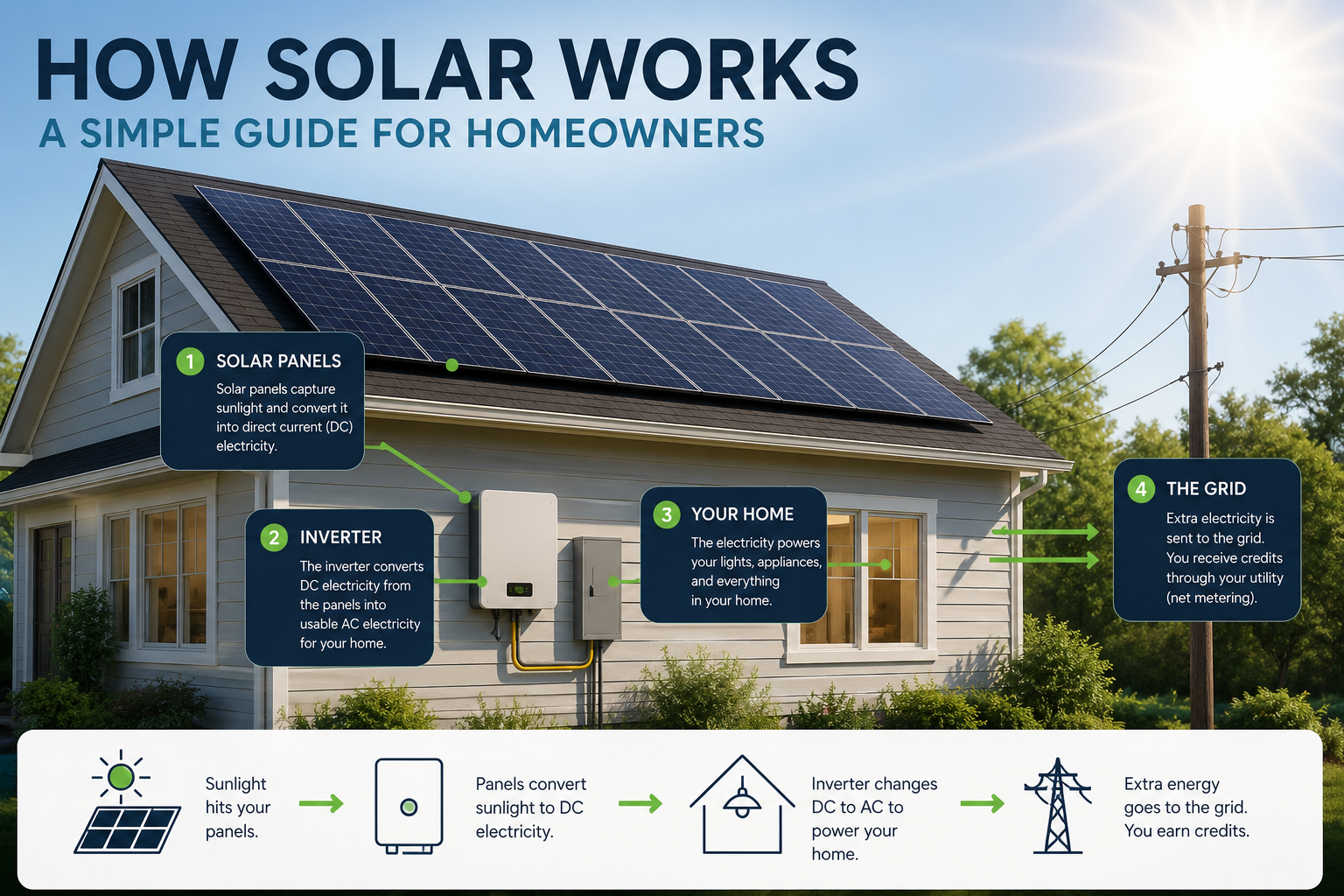
The good news is that residential solar is more straightforward than most people think. Your panels collect sunlight, your inverter converts that energy into usable electricity, and your home uses that power throughout the day.
This guide explains how solar panels work, what happens when your system produces extra electricity, and how solar connects to your utility company.
How do solar panels create electricity?
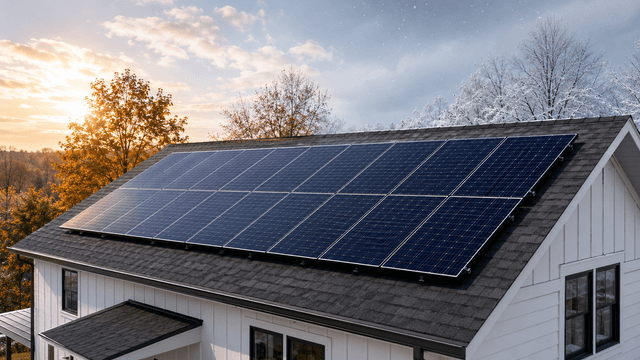
Solar panels capture sunlight and convert it into electricity.
Inside each panel are photovoltaic cells, often called PV cells. When sunlight hits those cells, they generate direct current electricity, also known as DC electricity.
The more sunlight your panels receive, the more electricity they can produce. Modern solar panels can still generate power on cloudy days, although production is usually lower than on bright, sunny days.
Simple way to think about it:
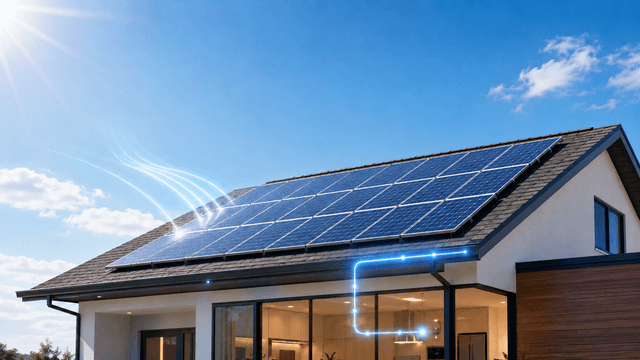
1. Sunlight hits the solar panels.
2. The panels create DC electricity.
3. The inverter converts that electricity into usable power.
4. Your home uses the electricity first.
5. Extra power may go to the grid or a battery.
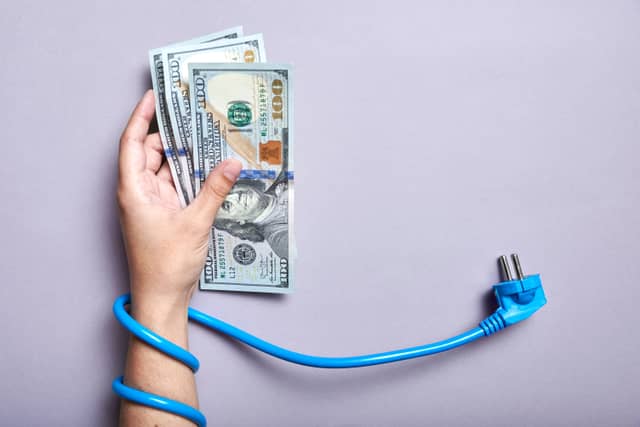
If you are comparing the financial side of solar, our guide on solar vs. utility costs explains how long-term energy costs can affect the decision.
What does a solar inverter do?
The electricity produced by solar panels is DC power.
Most homes use alternating current electricity, also known as AC power.
A solar inverter converts DC electricity into AC electricity so it can power your lights, appliances, electronics, HVAC system, and other household needs.
Solar panels
Create DC electricity from sunlight.
Solar inverter
Converts DC electricity into AC electricity.
Your home
Uses AC electricity to power everyday appliances and systems.
Think of the inverter as the translator between your solar panels and your home.
How does solar power your home?
When your solar system generates electricity, your home uses that power first.
That means your lights, appliances, electronics, and equipment can run using energy produced directly from your roof.
Because your home is producing some of its own electricity, you may purchase less electricity from your utility company.
Why this matters: The more electricity your home can use from your solar system, the less electricity you may need to buy from the grid.
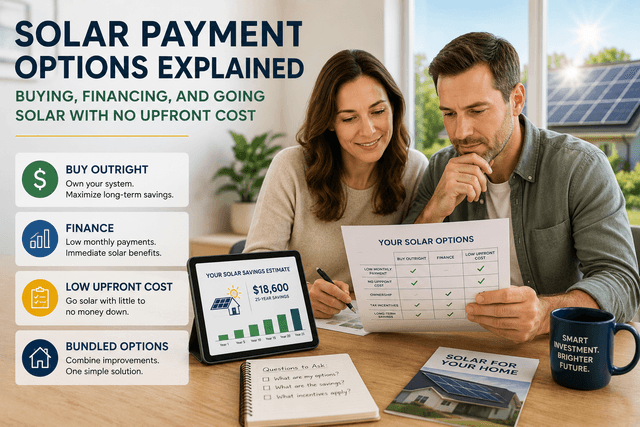
If you are thinking through payment structure, our article on solar payment options explains how different financing paths can affect long-term value.
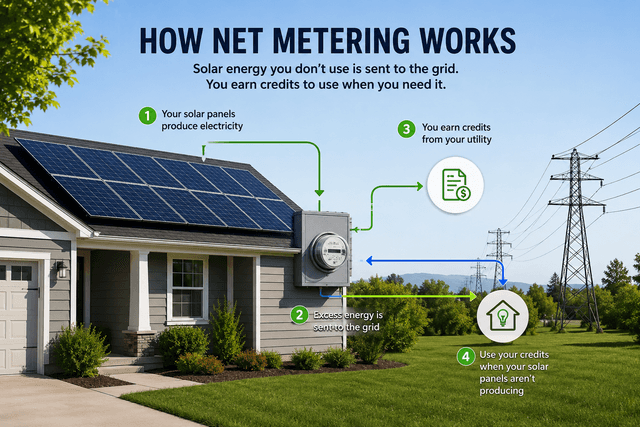
What happens when solar panels produce extra electricity?
Many solar systems produce more electricity than a home needs during certain parts of the day.
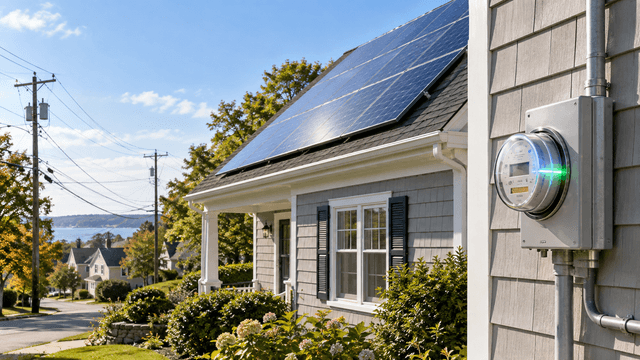
When that happens, the extra electricity may be sent back to the utility grid. Depending on your state and utility program, you may receive bill credits for that excess power.
Those credits can help offset electricity you use later, such as in the evening or during cloudy weather.
This is one reason solar credits and utility rules matter. They affect how much value homeowners receive from the electricity their system produces.
For a deeper breakdown, read our guide on what net metering is.
What happens at night?
Solar panels only generate electricity when sunlight is available.
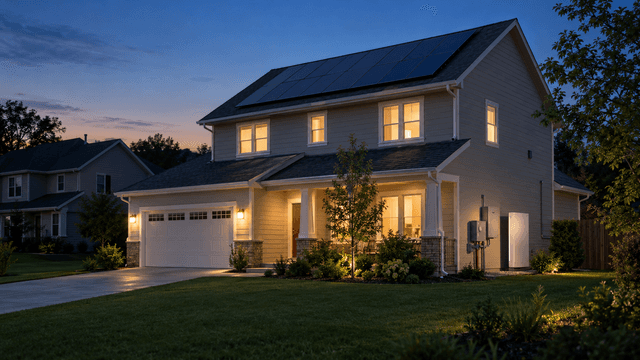
At night, your home usually pulls electricity from the grid unless you have battery storage installed.
That does not mean solar stops being valuable. During the day, your system can reduce the amount of grid electricity your home needs. Depending on your utility program, daytime production may also help create credits that offset nighttime usage.
| Time of day | How your home gets power |
|---|---|
| Daytime | Your home uses electricity from your solar panels first. |
| Extra sunny periods | Excess electricity may go to the grid or a battery, depending on your setup. |
| Nighttime | Your home usually pulls electricity from the grid or battery storage. |
Do solar panels work during power outages?
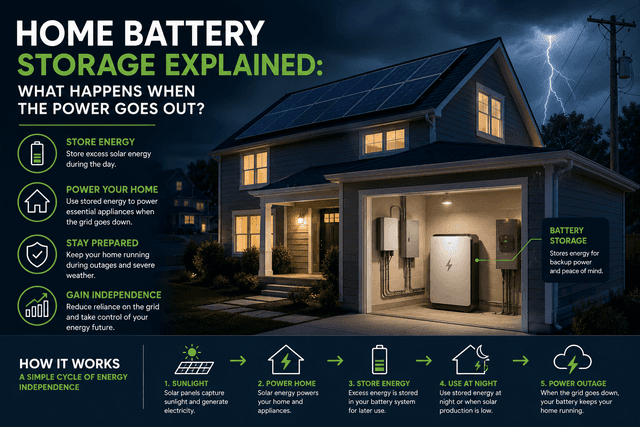
Most grid-connected solar systems automatically shut down during a utility outage for safety reasons.
This protects utility workers who may be repairing power lines. If solar panels continued sending electricity to the grid during an outage, it could create a safety risk.
If keeping power on during outages is important, homeowners often consider adding battery storage. A battery can store solar energy and provide backup power when the grid is unavailable, depending on the system design.
Important: Solar panels alone usually do not provide backup power during an outage. Battery storage is what changes the backup power conversation.
What factors affect solar production?
Every home is different. Two houses on the same street can produce different amounts of solar electricity based on roof layout, shade, usage, and system design.
Roof direction
The direction your roof faces affects how much sunlight your panels receive.
Roof angle
Pitch can affect how efficiently panels capture sunlight.
Shade
Trees, chimneys, and nearby buildings can reduce solar production.
System size
The number of panels affects how much electricity your system can produce.
Before installation, a solar evaluation helps estimate how much electricity your roof may be capable of producing.
If you want to better understand panel output, our guide on how much power solar panels produce explains what affects solar production over time.
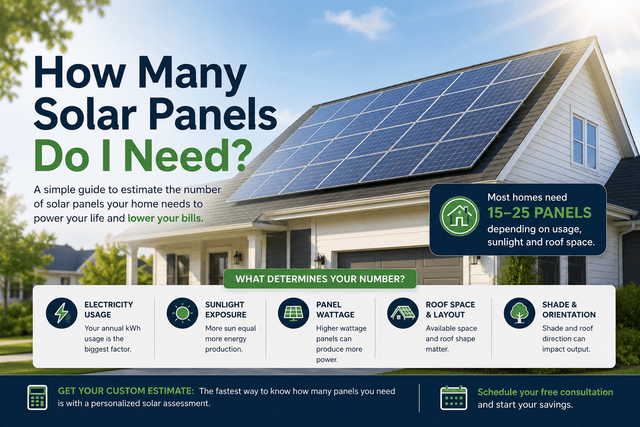
How many solar panels does a home need?
The number of solar panels your home needs depends on your electricity usage, roof space, panel production, and long-term energy goals.
A home with higher electric usage may need a larger system than a home that uses less electricity. Roof size, roof shape, and shading also matter because they affect how many panels can be installed and how much energy those panels can generate.
For a full breakdown, read our guide on how many solar panels you need to power a house.
Is solar right for every home?
Not every home is an ideal solar candidate.
However, many homeowners are surprised to learn that solar works on a wide range of roof types and property layouts.
The best way to know is through a professional assessment that reviews your roof, energy usage, utility provider, and goals.
A solar evaluation usually looks at:
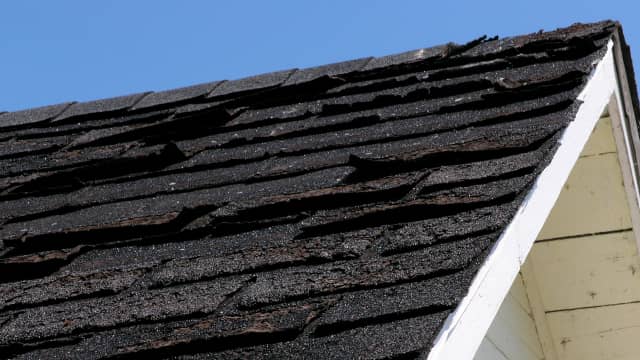
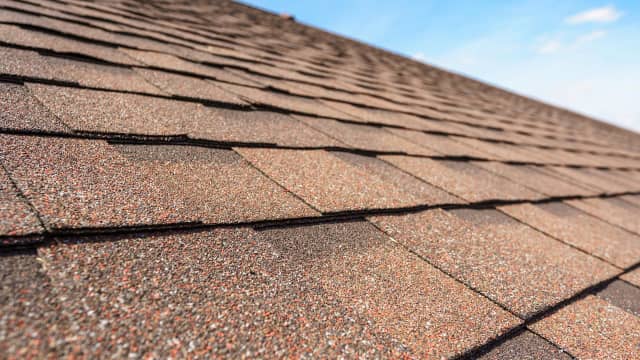
- Roof condition
- Roof direction and usable space
- Shade patterns
- Electricity usage
- Utility provider
- Available solar programs or credits
Understanding how solar works is the first step. Understanding how it works for your home is the next.
The real question is not just “Does solar work?”
The better question is how well solar can work for your home based on your roof, electricity usage, utility program, and long-term energy goals.
Continue learning
If you are learning how solar works, these guides are a good next step: