Quick answer
With a solar power purchase agreement, or PPA, you typically pay for the electricity the system produces. With a solar lease, you typically pay a set amount to use the solar equipment. In both arrangements, a third party usually owns the system. The better fit depends on the rate schedule, payment terms, production, maintenance responsibilities, buyout options, home-sale provisions and programs available where you live.
A PPA and a lease can look nearly identical from the roof. In both cases, solar panels are installed at the home, the system produces electricity and a third party generally owns the equipment.
The meaningful difference is in the agreement: what are you paying for, how can that payment change and what happens over the full contract term?
This guide breaks those questions down without assuming one option is best for every homeowner. Solar payment programs vary by location, provider, eligibility and current terms, so the actual agreement should always control the decision.
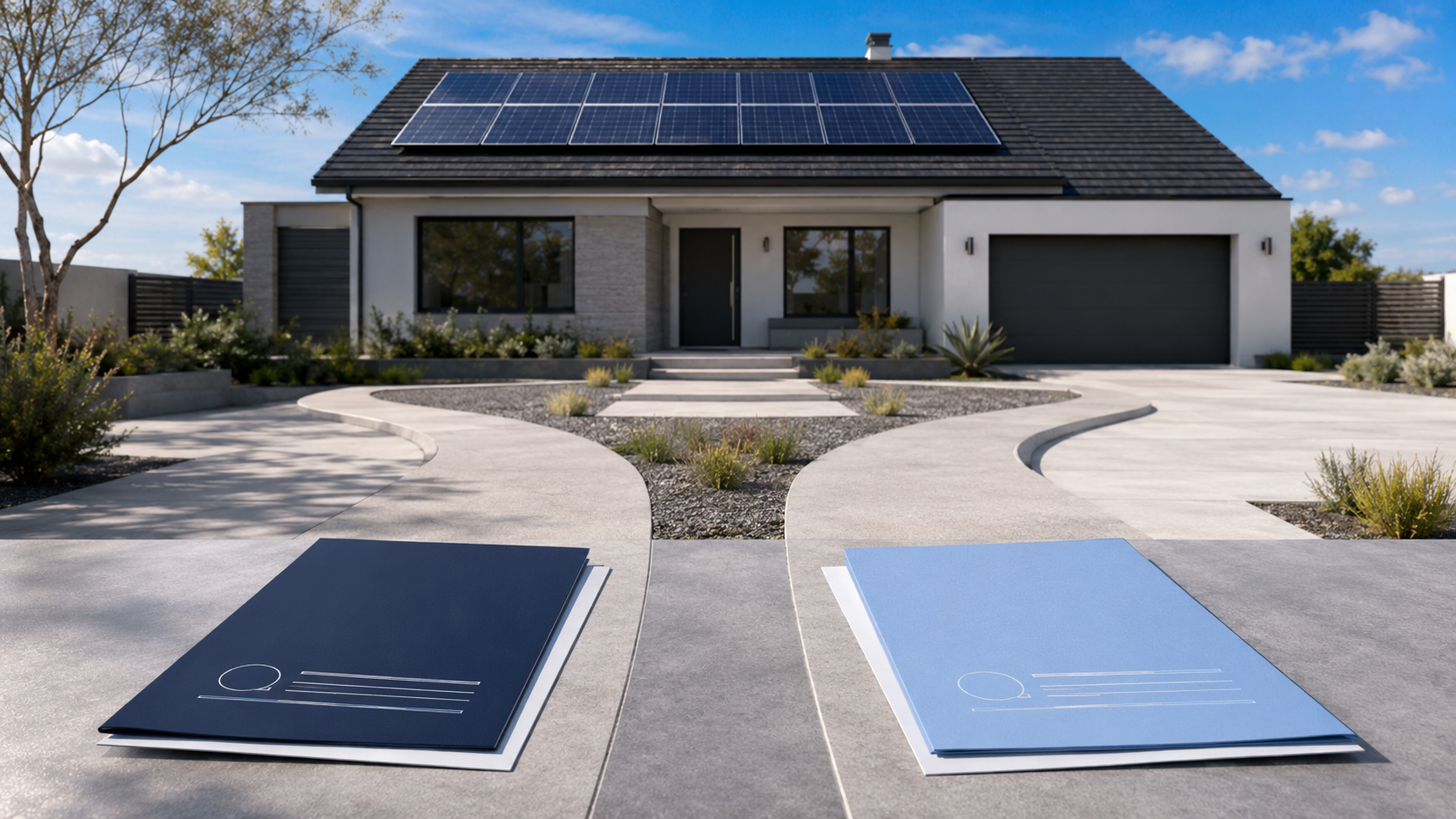
PPA
Payment is generally based on the solar electricity produced.
Lease
Payment is generally for the use of the solar equipment.
Both
The system is usually owned by a third party during the agreement.
Solar PPA vs. lease at a glance
The simplest distinction is what the monthly payment represents. A PPA is tied to energy production. A lease is tied to use of the equipment. That difference affects how the payment behaves from month to month.
| What to compare | Solar PPA | Solar lease |
|---|---|---|
| What you pay for | Electricity produced by the system, generally priced per kWh | Use of the solar equipment, generally through a scheduled payment |
| Monthly payment | Can vary with system production and the contract rate | Usually more consistent, subject to the agreement and any scheduled changes |
| System owner | Usually a solar provider or financing partner | Usually a solar provider or financing partner |
| Maintenance | Typically handled according to the third-party owner’s contract | Typically handled according to the third-party owner’s contract |
| Upfront payment | May be low or $0, depending on eligibility and terms | May be low or $0, depending on eligibility and terms |
| Availability | Varies by state, provider and program | Varies by state, provider and program |
The key takeaway: The labels “PPA” and “lease” do not reveal the full financial picture. Two agreements of the same type can have different rate schedules, escalators, guarantees, maintenance terms and end-of-contract choices.
How does a solar PPA work?
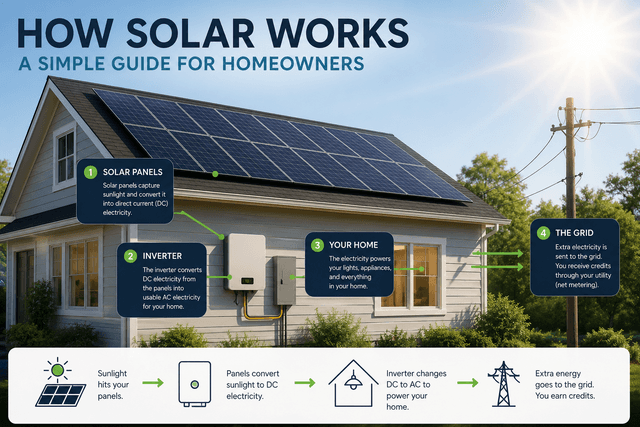
Under a PPA, a third party owns the solar system installed at the home. The homeowner agrees to purchase the electricity the system produces at the rate described in the contract.
PPA payment structure
Solar kWh produced × contract rate = PPA energy charge
This simplified formula explains why a PPA payment may change when solar production changes. The agreement may also include minimum payments, annual rate changes or other terms, so use the actual contract when estimating costs.
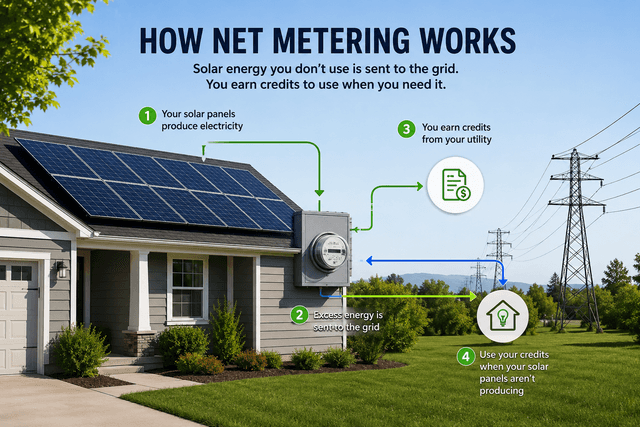
If the system produces more electricity in one month than another, the PPA charge may be higher because more solar energy was generated and purchased. That does not automatically mean the home used every kWh at the moment it was produced. Utility billing, credits and net-metering rules are separate parts of the energy-cost picture.
A PPA does not usually eliminate the utility account. The home may still buy electricity from the grid when solar production does not meet usage, and utility service charges may remain. For the broader comparison, see how solar and utility costs can behave over time.
Do not confuse “$0 down” with “free.” A PPA may reduce or remove an upfront installation payment, but the homeowner still agrees to purchase solar electricity under a long-term contract. Trinity’s guide to what “free solar” language actually means explains the distinction.
How does a solar lease work?
With a solar lease, a third party also generally owns the equipment. Instead of purchasing each kWh the system produces, the homeowner pays to use the solar system according to a payment schedule.
The lease payment is usually more consistent from month to month than a PPA payment because it is not directly calculated from that month’s solar production. However, “fixed monthly payment” does not always mean the amount stays identical for the entire term. Some agreements include scheduled increases, commonly called escalators.
01
Scheduled payment
The agreement states what the homeowner pays to use the system and when that amount may change.
02
Solar production
The system’s output may affect the home’s utility purchases, but it generally does not set the lease payment each month.
03
Third-party ownership
The owner’s responsibilities for monitoring, repair and maintenance should be defined in the contract.
A lease can appeal to a homeowner who prefers a scheduled equipment payment. A PPA can appeal to someone who prefers the solar charge to follow system production more directly. Neither preference settles the decision without comparing the complete agreements.
Which payment can change more from month to month?
A PPA payment generally moves with production. A lease payment generally follows a schedule. The chart below shows the mechanism—not a promise about the exact amount of either option.
Illustrative monthly behavior
Illustrative only. Actual billing depends on the agreement, system performance, utility charges and local programs.
Higher solar production can mean purchasing less electricity from the utility, but the relationship is not always one-for-one. Household usage timing, utility rates, credits and fixed charges all affect the total monthly energy cost.
Compare the whole energy picture—not one payment
A useful comparison places the PPA or lease payment beside expected solar production, remaining utility purchases, rate changes and the full contract term.
Who owns and maintains the solar system?
Third-party ownership is one of the biggest similarities between a PPA and a lease. The financing partner or solar provider generally owns the equipment during the agreement and typically receives ownership-related benefits, subject to applicable program and contract rules.
That ownership can reduce some responsibilities for the homeowner, but “maintenance included” is too broad to rely on without reading the agreement. The contract should explain:
- Who monitors system production
- Who responds if equipment stops working
- What equipment and labor are covered
- Whether response times or production commitments apply
- Who handles roof access, temporary panel removal or reinstallation
- What the homeowner must do to keep the agreement in good standing
If the roof may need work during the contract term, ask about coordination before signing. Trinity’s guide to replacing a roof with an existing solar system explains why ownership, authorization and reinstallation responsibilities matter.
What contract terms should you compare?
The payment type is only the first layer. Before comparing offers, place the important terms side by side.
| Contract item | Question to ask | Why it matters |
|---|---|---|
| Starting payment or rate | What exactly determines the first-year charge? | Creates the baseline for the comparison |
| Escalator | Can the rate or payment increase, and by how much? | Changes the long-term cost |
| Contract length | When does the agreement end? | Defines the commitment period |
| Production terms | Is there a production estimate or guarantee, and what are the remedies? | Clarifies what happens if output differs from expectations |
| Maintenance | Who handles service, monitoring and equipment replacement? | Prevents responsibility gaps |
| Home sale or transfer | Can a buyer assume the agreement, and what approval is required? | Can affect the sale timeline and buyer conversation |
| Purchase or buyout | Can the system be purchased, when and under what valuation method? | Affects future ownership choices |
| End of term | What happens to the system when the agreement expires? | Clarifies renewal, removal and purchase options |
Ask for the full contract and proposal assumptions—not only the first monthly estimate. A lower starting payment can be outweighed by a different escalator, term length or end-of-contract outcome.
What happens if you sell the home?
A PPA or lease is a long-term agreement connected to equipment installed at the property. If the homeowner sells before the agreement ends, the contract may allow the buyer to assume it, require qualification, provide a purchase option or define another process.
Do not wait until the home is under contract to investigate. Before choosing either option, ask:
- Can the agreement be transferred?
- Does the buyer need financial approval?
- Who starts the transfer and how long can it take?
- Can the system be purchased before the sale?
- Are there fees or documentation requirements?
If a move is possible during the term, transfer and buyout language should carry more weight in the decision. A strong solar payment comparison reflects the homeowner’s likely timeline—not only today’s budget.
Is a PPA or lease better for you?
There is no universal winner. Availability comes first: one or both options may not be offered in the homeowner’s state or through the current program. If both are available, the better fit depends on which payment structure and contract terms match the household’s priorities.
A PPA may deserve a closer look if
- You want the solar charge to track system production more directly
- You are comfortable reviewing a per-kWh rate and rate schedule
- You prefer third-party ownership over purchasing the system
- The complete PPA terms compare favorably with the alternatives available to you
A lease may deserve a closer look if
- You prefer a scheduled equipment payment over a production-based charge
- You want third-party ownership rather than purchasing the system
- You understand any escalator and how the payment changes over time
- The complete lease terms compare favorably with the alternatives available to you
Homeowners who want to own the system should also compare cash purchase and solar financing. The broader guide to solar payment options explains how ownership-focused choices differ from PPAs and leases.
Whichever path you review, compare the starting cost, total contract cost, expected production, remaining utility costs, maintenance responsibilities and exit terms together. That is more decision-useful than choosing based on “$0 down,” “fixed payment” or another isolated feature.
Final thoughts: Compare agreements, not labels
A PPA generally charges for solar electricity. A lease generally charges for use of the equipment. Both commonly involve third-party ownership, but their payment behavior and contract details can create different outcomes.
The strongest decision comes from comparing the actual options available for the home. Review the complete rate or payment schedule, production assumptions, utility interaction, ownership, maintenance, transfer, buyout and end-of-term terms before choosing.
Compare solar payment options for your home
A Trinity Solar Expert can explain which programs may be available based on the home, location, eligibility and current partner terms.
Continue learning
Review lease, PPA, loan and purchase pathways. Decision guideHow homeowners pay for solar →
Compare ownership, upfront cost and monthly payment goals. Cost factorsWhat affects Trinity Solar cost? →
See why system and household details shape the estimate. Long-term viewSolar vs. utility costs →
Compare two long-term energy paths.