A “solar warranty” is usually several protections, not one blanket promise
A home solar system may include separate coverage for panel defects, panel output, the inverter, installation workmanship and roof penetrations. Those protections can come from different companies, last for different periods and cover different costs. The written warranty and agreement for your specific system—not a general term such as “25-year warranty”—determine what is actually covered.
Warranty length matters, but it is only the first comparison. Before choosing a solar provider, identify who stands behind each part of the system, what starts a valid claim, what costs remain yours and whom you contact when something goes wrong.

What are the main types of solar warranties?
The labels can vary by manufacturer, installer and payment arrangement. These four categories help homeowners understand the most common coverage layers.
Panel product warranty
This may cover eligible defects in materials or manufacturing. It does not automatically cover every reason a panel could stop working, and the remedy may be repair, replacement or another defined response.
Panel performance warranty
This may promise that eligible panels will retain at least a stated level of output under defined conditions. It is different from promising a specific electric bill, annual savings amount or whole-system production result.
Inverter or equipment warranty
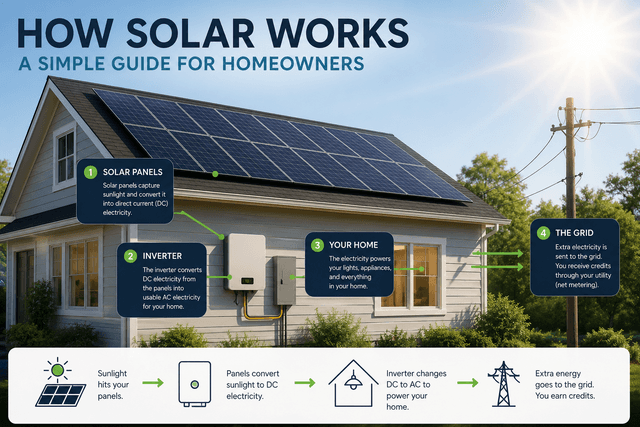
The inverter converts the array’s electricity into power the home can use. It may have a different provider, term and claims process than the panels. Other equipment may also carry its own coverage.
Workmanship and roof-penetration coverage
This may address eligible issues connected to the installation work, mounting or roof penetrations. It should be reviewed separately from the manufacturer’s equipment warranties.
Solar panels can remain useful beyond a warranty term, and coverage does not mean equipment will never need attention. Our guide to how long solar panels last explains the difference between service life, gradual degradation and warranty coverage.
Product coverage and performance coverage are not the same
| Question | Product warranty | Performance warranty |
|---|---|---|
| What does it generally address? | Eligible defects in the physical panel or covered component | Output falling below a defined threshold under stated terms |
| What does it not automatically promise? | Coverage for damage, misuse, outside labor or every system issue | A specific utility bill, savings total or annual system production |
| What should you verify? | Covered defects, exclusions, remedy, labor, shipping and claim steps | Starting value, degradation schedule, measurement method and remedy |
A performance warranty concerns a defined level of panel output. Actual household results also depend on system size, weather, shade, orientation, equipment operation and electricity use. See how much power solar panels produce for the difference between panel ratings and real system production.
What does Trinity currently publish about warranty terms?
For upfront solar purchases, Trinity’s current public warranty overview lists a 25-year solar panel warranty, up to 12 years for inverters, 10 years for labor and five years for roof penetrations. These are different coverage categories—not a single universal warranty.
Coverage may differ by equipment, provider, payment arrangement, signed agreement and installation date. The documents supplied with the current proposal control. Homeowners should confirm the term, provider, exclusions and remedy for their exact system before signing.
How can payment choice affect warranty and service responsibility?
Ownership changes who may be responsible for maintenance and service. The Federal Trade Commission advises that system owners generally handle maintenance unless their contract says otherwise, while a lease or similar third-party arrangement can assign responsibilities differently.
| Arrangement | What to clarify | Why it matters |
|---|---|---|
| Upfront purchase or solar loan | Which warranties come from the manufacturer, installer and any other provider | Owning the system does not mean every repair-related cost is included |
| Lease or power purchase agreement | Who owns the equipment, monitors performance, approves service and pays covered costs | The agreement may define service obligations and homeowner responsibilities differently |
If you are comparing third-party ownership, review the practical differences between a solar PPA and a lease, then match the warranty language to the specific agreement being offered.
Who is responsible when part of a solar system has a problem?
A solar array operates as one system, but responsibility may be divided among several companies. The installer may coordinate service, the panel or inverter manufacturer may decide whether equipment qualifies for a warranty remedy, and a financing or system-ownership provider may control approvals under a lease or PPA.
Homeowner
Reports the issue, preserves records, follows monitoring or maintenance requirements and avoids unauthorized work that could complicate a claim.
Installer or service provider
May diagnose system-level issues, address eligible workmanship concerns and help route an equipment claim to the responsible provider.
Equipment manufacturer
Evaluates claims under its written product or performance warranty and determines the available remedy for an eligible component.
System owner or financing partner
For a lease, PPA or other third-party arrangement, the agreement may assign monitoring, maintenance, repair approval and payment responsibilities.
Which warranty might apply to a solar problem?
The symptom is only a starting point. Diagnosis determines whether the issue involves equipment, installation, site conditions, monitoring or another cause.
| What the homeowner notices | Possible coverage path | What still needs to be confirmed |
|---|---|---|
| A panel has a confirmed manufacturing defect | Panel product warranty | Eligibility, remedy, labor, shipping, access and replacement compatibility |
| An eligible panel measures below its stated output threshold | Panel performance warranty | Testing method, degradation schedule, site conditions and available remedy |
| The inverter stops operating | Inverter or equipment warranty | Manufacturer term, diagnosis, replacement labor and system downtime |
| A confirmed issue is tied to installation work | Workmanship coverage | Covered work, reporting deadline, exclusions and repair responsibility |
| Water intrusion is traced to a solar roof penetration | Roof-penetration coverage may apply | Cause, affected area, reporting process and whether resulting damage is included |
| Production is lower than the homeowner expected | Monitoring and diagnosis first | Weather, shade, usage, utility data, equipment operation and the contract’s defined performance terms |
What may not be covered by a solar warranty?
Exclusions depend on the actual document. A warranty may limit or exclude certain damage, unauthorized work, misuse, failure to follow required procedures, environmental events or costs that are separate from the covered repair. Never assume a covered component means every related expense is covered.
Ask specifically whether diagnosis, service calls, labor, shipping, permits, access, panel removal, reinstallation and replacement equipment are included. Also ask how coverage applies if another contractor works on the roof or solar system.
If the roof may need work during the system’s life, read what to expect when replacing a roof with solar panels already installed. Coordinating authorization and documentation before work begins can help avoid preventable warranty disputes.
A covered part does not always mean a zero-cost repair
Warranty value depends on the complete remedy. A replacement component may be covered while diagnosis, technician labor, shipping, permits, equipment access, panel removal or reinstallation remain separate. The reverse can also happen: workmanship coverage may address eligible installation labor without covering an unrelated equipment failure.
Scenario: covered inverter
The manufacturer approves a replacement inverter. The homeowner still needs to know who ships it, who installs it, whether labor is included and how long the system may be offline.
Scenario: roof work is needed
The roof repair itself may be unrelated to a solar defect. Panel removal, storage and reinstallation can follow separate pricing and authorization rules.
Scenario: production concern
A lower bill credit or a cloudy month does not by itself establish a performance-warranty claim. The system and eligible panels may need defined testing.
Scenario: storm damage
Weather damage may fall outside an equipment warranty and may instead involve homeowners insurance or another agreement, subject to its terms.
How does a solar warranty claim usually work?
The exact process comes from the applicable warranty and agreement. A practical claims path often includes these steps:
- Document the symptom. Save monitoring alerts, dates, photos, utility information and any error codes without attempting unsafe repairs.
- Contact the designated provider. Start with the service contact listed in the agreement rather than assuming the panel manufacturer handles the entire system.
- Allow diagnosis. The provider may need monitoring data, remote troubleshooting or an onsite inspection to identify the cause.
- Identify the controlling coverage. Confirm the provider, warranty type, eligible event, exclusions and remaining term.
- Get the remedy and costs in writing. Ask what will be repaired or replaced, who performs the work and which related costs are included.
- Keep the claim record. Save claim numbers, correspondence, work orders, replaced-equipment details and the final resolution.
The FTC recommends saving written warranties and proof of purchase, following the stated claims process and getting important verbal promises in writing. If a reported eligible defect is not properly resolved, retain the record of when it was first reported.
Use this 10-question scorecard before comparing solar warranties
- Name every provider. Identify the company responsible for the panels, inverter, installation work and any roof-penetration coverage.
- Get the documents before signing. Review the complete written terms, not only a proposal summary or verbal explanation.
- Define the covered event. Ask what defect, output threshold or installation issue qualifies for a claim.
- Check the remedy. Determine whether the provider may repair, replace, reimburse or use another stated response.
- Find the uncovered costs. Ask about diagnosis, labor, shipping, permits, removal and reinstallation.
- Review exclusions. Look for weather damage, unauthorized modifications, roof work, maintenance requirements and other limitations.
- Understand the claims path. Know whom to contact, what records are required and how the issue will be evaluated.
- Ask about a home sale. Confirm whether coverage transfers, what paperwork is needed and whether the payment agreement creates separate requirements.
- Plan for provider changes. Ask who supports the warranty if the installer, manufacturer or financing relationship changes.
- Compare response responsibility. Identify whether one company coordinates the claim or whether you must manage several providers.
Warranty red flags to resolve before signing
One long term is used for everything
“25 years” may describe only one coverage layer. Ask for the separate terms for panels, output, inverter, workmanship, roof penetrations and labor.
The provider is not named
A proposal should make clear which company stands behind each promise and where the full written terms can be reviewed.
The remedy is vague
“Covered” is incomplete without explaining whether the provider repairs, replaces, reimburses or offers another defined response.
Related costs are skipped
Ask directly about diagnosis, service calls, labor, shipping, permits, access, removal and reinstallation.
What should homeowners check before selling a solar home?
Warranty transfer and payment-agreement transfer are separate questions. Before listing the home, gather the warranty documents, system ownership records, equipment details, monitoring history and service records. Confirm whether each warranty transfers automatically, requires notice, charges a fee or applies only to the original purchaser.
If the system is leased, financed or under a PPA, review the agreement’s sale and transfer process early. DOE advises buyers of solar homes to understand system ownership, obtain available production information and verify whether associated equipment such as a battery remains under warranty.
What should you keep after installation?
Save the signed agreement, each warranty, equipment model and serial numbers, final system design, inspection records, permission-to-operate notice and service history. The FTC recommends retaining warranty and purchase records because they document the product, purchase date and applicable promise.
Keep written records of service requests, including dates, photos, monitoring information and responses. If a salesperson or provider makes a warranty-related promise that matters to your decision, request that it be included in the written agreement.
Compare the coverage attached to your solar proposal
A Trinity Solar Expert can explain the equipment, payment options and warranty terms available for your home. Your written proposal and agreement will define the coverage that applies.