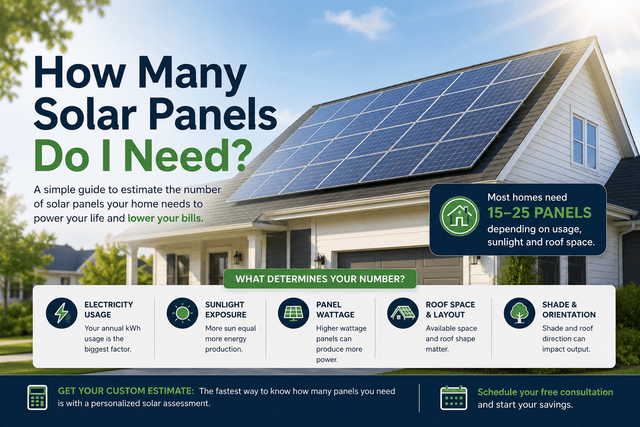
Many EV drivers may need roughly 5 to 10 modern solar panels’ worth of annual production to offset their at-home vehicle charging—but that is a planning range, not a universal answer. Your result depends on annual mileage, the vehicle’s efficiency, charging losses, panel output, local sunlight and how much of the vehicle’s charging happens at home.
“How many solar panels does it take to charge an electric car?” sounds like a simple panel-count question. In reality, the calculation begins with how much electricity the vehicle will use over an entire year.
A driver traveling 5,000 miles per year creates a very different charging load than someone traveling 15,000 miles. Two EVs driven the same distance may also use different amounts of electricity because their efficiency, size, climate controls and driving conditions differ.
The best design adds the vehicle’s projected charging demand to the home’s existing electricity use, then models how much electricity the proposed solar system may produce on that specific property.

How much electricity does an EV use?
Electric-vehicle efficiency is commonly expressed in kilowatt-hours per 100 miles. According to the U.S. Department of Energy’s Alternative Fuels Data Center, current light-duty electric vehicles may use approximately 25 to 40 kWh to travel 100 miles, although individual models and real-world results vary.
The vehicle’s EPA efficiency rating provides a stronger starting point than battery capacity alone. Battery capacity shows how much energy the battery may hold. Efficiency and mileage show how much electricity the driver is likely to use.
This estimates electricity used by the vehicle. The solar-design estimate should also allow for energy lost between the electrical source, charger and vehicle battery.
Example: an EV driven 12,000 miles per year
| Calculation step | Illustrative input | Result |
|---|---|---|
| Annual mileage | 12,000 miles | Starting demand |
| Vehicle efficiency | 30 kWh per 100 miles | Model-specific input |
| Vehicle energy | 12,000 × 30 ÷ 100 | 3,600 kWh per year |
| Charging allowance | Added for conversion and charging losses | Final wall-energy estimate is higher |
Illustrative example only. Vehicle efficiency and charging losses vary with the EV, charger, temperature, speed, driving conditions and other factors.
How to estimate the number of solar panels
Once annual EV charging demand is estimated, compare it with the projected annual electricity production of the proposed panels. The key word is projected: a panel’s wattage rating is not the same as the amount of electricity it will produce over a year.
For example, if charging is projected to require 3,900 kWh from the home each year and each proposed panel is modeled to produce 500 kWh annually, the planning estimate would be:
That does not mean eight panels will produce the same result on every house. A site-specific model must account for the proposed equipment, local solar resource, roof direction, pitch, shade, weather and system losses.
Illustrative panel estimates by driving distance
The table below shows how mileage can change the estimate. It assumes an EV rated at 30 kWh per 100 miles, adds a 10% planning allowance for charging losses and assumes each panel produces 500 kWh annually.
| Annual driving | Vehicle energy | With 10% allowance | Illustrative panels |
|---|---|---|---|
| 5,000 miles | 1,500 kWh | 1,650 kWh | About 4 |
| 10,000 miles | 3,000 kWh | 3,300 kWh | About 7 |
| 12,000 miles | 3,600 kWh | 3,960 kWh | About 8 |
| 15,000 miles | 4,500 kWh | 4,950 kWh | About 10 |
These examples explain the calculation; they are not system recommendations. Actual EV efficiency, charging losses and annual solar production may differ materially.
Six factors that change the panel count
Annual mileage
More driving creates more charging demand. Use expected future mileage, not only the current commute.
Vehicle efficiency
A larger or less-efficient EV may use more electricity per mile than a smaller, more-efficient model.
At-home charging share
Workplace and public charging reduce the electricity supplied by the home, though habits can change.
Local solar production
Location, shade, roof direction, pitch and weather affect annual production from each panel.
Panel rating
Higher-wattage panels may reduce the number required, but wattage alone does not predict annual output.
Charging losses
Some electricity is lost as it moves through charging equipment and into the vehicle battery.
Can an EV charge directly from solar panels?
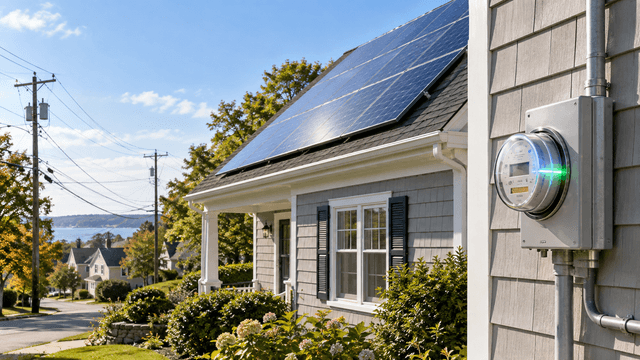
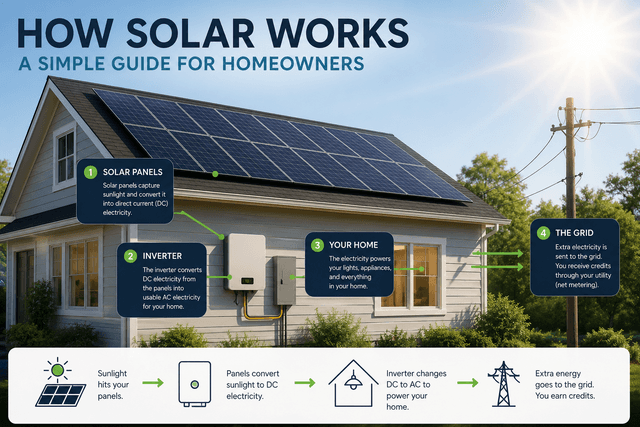
A typical grid-connected home does not assign specific solar panels exclusively to the vehicle. Solar panels produce electricity for the home, household loads use electricity, and the utility grid manages the difference according to the system configuration and applicable utility rules.
A homeowner may describe the vehicle as being “powered by solar” when the home’s annual solar production offsets the electricity used for charging. That is different from proving that every charging session used solar electricity at the exact moment it was generated.
Can solar panels charge an EV at night?
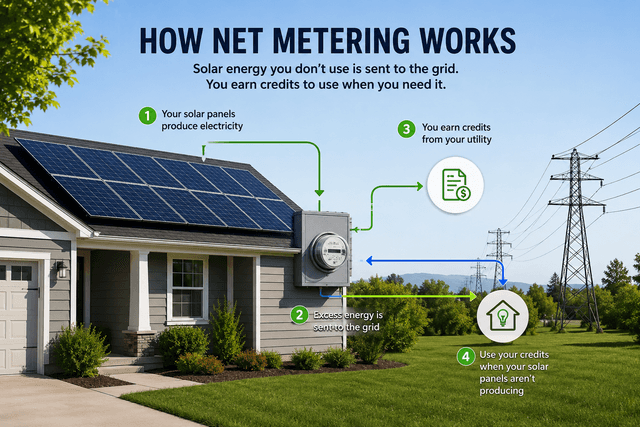
Solar panels do not produce electricity at night. A grid-connected vehicle can still charge overnight using utility electricity. Daytime solar production may offset electricity purchases under applicable utility programs, but the value and mechanics of those credits vary by utility and location.
Daytime charging
May align more closely with active solar production when the vehicle is at home and connected.
Overnight charging
Commonly draws from the grid unless compatible storage supplies some or all of the charging load.
Do you need a home battery?
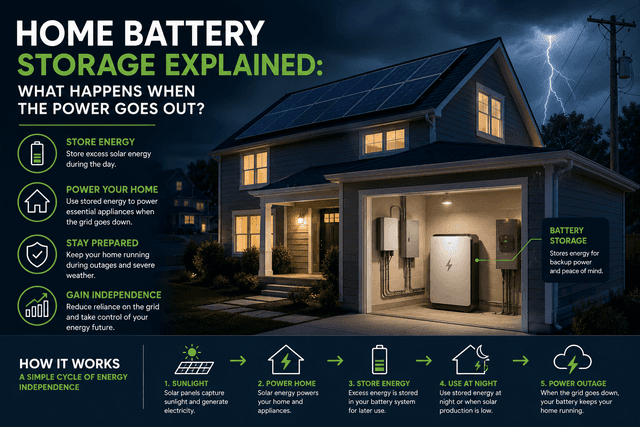
No. A battery is not required for a grid-connected solar system to help offset EV charging. Many homeowners charge from the grid when needed while the solar system produces electricity during daylight hours.
A home battery may store solar energy for later use, but it should not be treated as an unlimited fuel tank for the vehicle. EV batteries are often much larger than residential home-storage batteries, and the charger may draw electricity quickly.
- How much usable energy can the battery store?
- How much power can it supply at one time?
- Is EV charging supported in the proposed configuration?
- How much stored energy should remain for household backup?
- Can the battery recharge adequately from the solar array?
Level 1 vs. Level 2 charging
Solar-panel count is an energy question. Charger level is primarily a charging-speed and electrical-capacity question. A faster charger does not automatically make the vehicle use more energy per mile, but it can create a larger electrical load while charging.
| Charging type | Common residential supply | General use | What to verify |
|---|---|---|---|
| Level 1 | 120 volts | Slower charging over longer parking periods | Dedicated circuit and daily range needs |
| Level 2 | Typically 240 volts at a home | Faster home charging | Panel capacity, circuit, charger and installation |
Should future EV charging be included in your solar design?
Yes. If an EV purchase is reasonably likely, tell the solar designer before the system is finalized. Designing solely around historical utility bills can underestimate future electricity demand because those bills do not contain vehicle charging that has not started yet.
Also mention any plans for a second EV, heat pump, electric water heater, pool, addition or other major load. Available roof space and utility rules may limit how much future demand can or should be incorporated.
Size solar around your home, driving and future goals
A roof-specific assessment can combine household usage, expected EV charging, available panel space, projected solar production and applicable utility rules.
The right answer comes from annual energy—not one full charge
Sizing solar around the EV’s full battery capacity can be misleading because most drivers do not arrive home with a completely empty battery every night. The more useful calculation combines annual mileage with real vehicle efficiency and expected at-home charging.
Once that annual charging demand is estimated, a solar professional can model how many panels may produce a comparable amount of electricity on the home’s usable roof. That produces a more defensible answer than applying one national panel count to every driver and property.