Quick answer
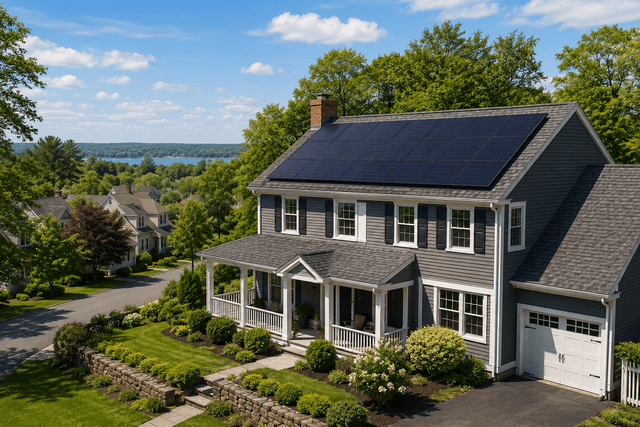
In the Northern Hemisphere, south-facing solar panels often support the highest annual electricity production—but a roof does not have to face south for solar to work. East-facing panels produce more in the morning, west-facing panels produce more later in the day and a clear east- or west-facing roof may outperform a shaded south-facing roof. The best layout depends on direction, shade, pitch, usable roof space, location and the household’s energy goals.
“Which way does the roof face?” is an important solar question, but it is not a pass-or-fail test. Two homes with the same compass orientation can have very different solar potential because one roof may have more shade, less usable space, a different pitch or obstructions that limit panel placement.
The more useful question is: Which available roof area can produce the most useful electricity for this home? Answering it requires looking at the entire property rather than choosing a direction in isolation.
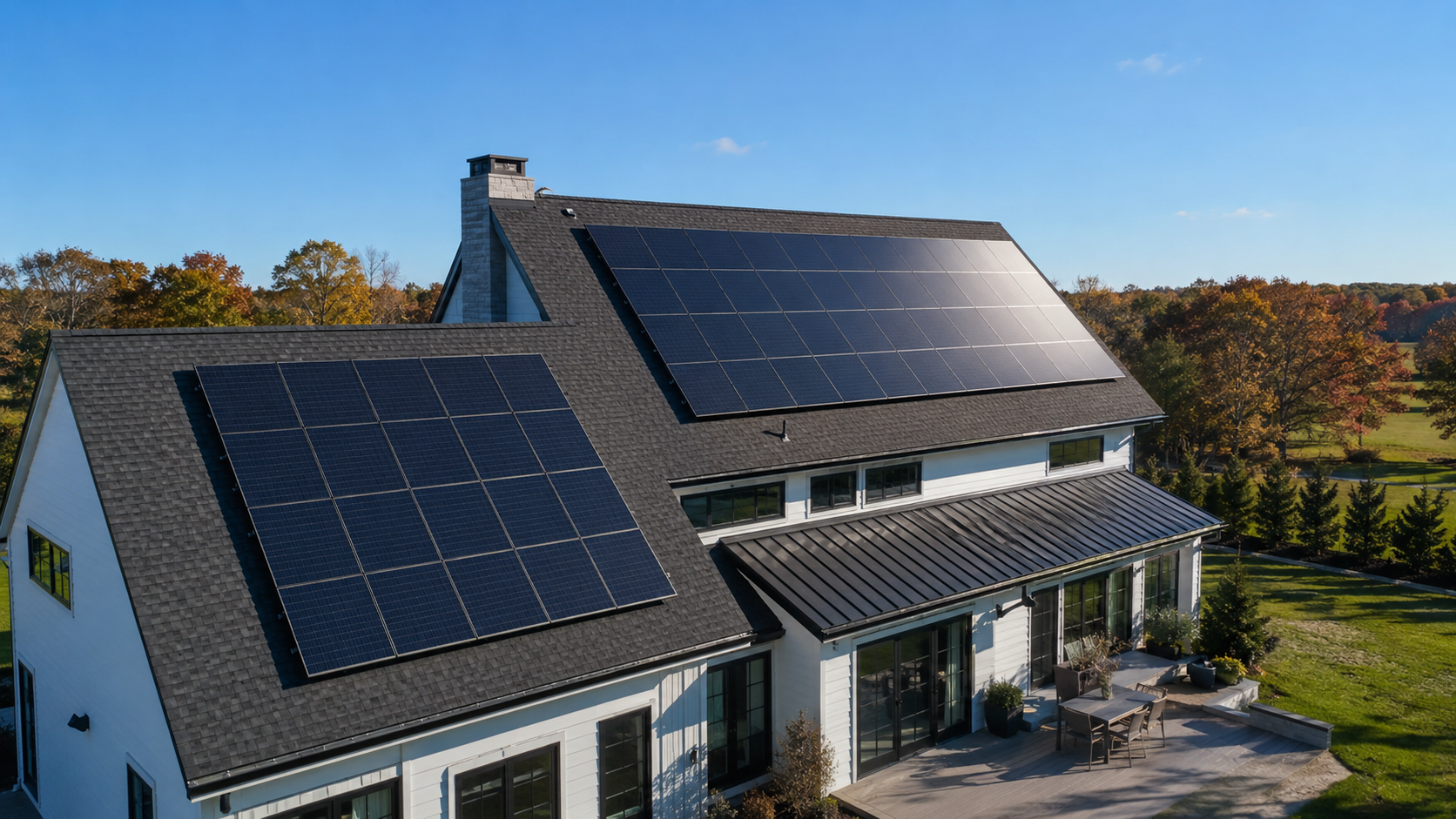
South
Often supports strong annual production and a broad midday peak
East
Shifts more of the array’s daily production toward the morning
West
Shifts more production toward the afternoon and early evening
Why does solar panel direction matter?
The sun moves from east to west across the sky. Panel direction—or azimuth—affects when sunlight reaches the panel surface most directly. That changes both the amount of electricity the system may produce and the hours when that production occurs.
A south-facing array commonly builds production through the morning, reaches its strongest period around midday and tapers through the afternoon. An east-facing array moves more of that production earlier. A west-facing array moves it later.
A day of solar production
Direction changes the shape of the production curve
These bands illustrate typical timing—not guaranteed output. Weather, season, shade, tilt, equipment and location change the actual curve.
Direction does not change a panel’s rated wattage. It changes the sunlight available to the panel in real conditions. For a fuller explanation of the difference, see how panel wattage becomes daily and annual solar production.
South-, east-, west- and north-facing panels compared
South is a common starting point for solar design in the United States because the sun follows a generally southern path across the sky. It is not automatically the best usable roof plane on every property.
| Direction | Typical production pattern | Potential strength | What must be checked |
|---|---|---|---|
| South | Broad production centered around midday | Often strong for total annual production | Shade, pitch, roof area and obstructions |
| East | More production during morning hours | Can align with earlier household electricity use | Morning shade and lower afternoon output |
| West | More production during afternoon and early evening | Can align with later household electricity use | Afternoon shade and lower morning output |
| North | Often receives less direct sunlight on a pitched roof | May be considered in limited, site-specific designs | Expected losses, roof pitch and better alternatives |
North-facing placement is not a universal “never,” but it usually requires the most careful scrutiny on a pitched roof in the Northern Hemisphere. A low-slope roof, unusual site conditions or a specific design constraint can change the analysis. Production modeling should make the tradeoff visible before a homeowner commits.
Do not reject the roof by compass alone
A clear east- or west-facing roof can be more useful than a south-facing roof interrupted by shade, vents, dormers or limited panel space.
Is east-facing or west-facing solar better?
Neither direction wins automatically. East-facing panels receive stronger sunlight earlier in the day. West-facing panels receive it later. The better fit depends on the available roof, local sunlight, shade and when the household uses electricity.
East-facing roof
Earlier solar production
- Production begins building earlier in the morning
- May align with morning appliances, home offices or daytime occupancy
- Falls away sooner as the sun moves west
West-facing roof
Later solar production
- Production remains stronger later in the afternoon
- May align with cooling, cooking and after-school or after-work use
- Builds more slowly during the morning
Some utility plans value electricity differently at different times, but those rules vary by utility, location and current tariff. A west-facing system should not be described as financially better without comparing the home’s actual rate structure, expected production and usage pattern.
The same caution applies to batteries. A battery can change when stored solar energy is used, but it does not make roof direction irrelevant. System production, storage capacity, backup goals, operating settings and utility rules still need to be evaluated together.
What can matter more than compass direction?
Orientation is one variable in a larger design model. The factors below can change which roof plane is actually the strongest choice.
01
Shade throughout the day
Trees, chimneys, nearby buildings and roof features can block useful sunlight. The timing and duration of shade matter—not only whether shade exists.
02
Roof pitch
Tilt changes the angle at which sunlight reaches the array. The effect varies with direction, latitude and season.
03
Usable roof area
Setbacks, valleys, hips, dormers, vents and equipment reduce the area where panels can be placed safely and legally.
04
Roof condition
A roof should be evaluated as part of the solar timeline. Limited remaining life can create a removal-and-reinstallation project later.
05
Location and seasonal sun
Latitude, weather patterns and the sun’s seasonal path affect expected production at the property.
06
Energy and system goals
Historical usage, future electric loads, desired production and available space influence the final system size and layout.
Homeowners can use these factors for an initial screen, but a final layout should rely on a site-specific assessment. Review three early signs that a home may be suitable for solar, then confirm the roof with professional production modeling.
Can solar panels go on more than one roof direction?
Yes. A system can be divided across multiple suitable roof planes when one section cannot hold the entire array or when a combined layout creates a better production profile. An east-west split, for example, may produce across a wider portion of the day than a single-direction array.
| Layout approach | Why it may be considered | What to model |
|---|---|---|
| One roof plane | The strongest section has enough clear, usable area | Annual production, shade and panel fit |
| East-west split | The home has two workable planes or benefits from a broader daily production window | Morning-versus-afternoon production and total output |
| South plus another plane | The south-facing section is useful but cannot hold the full design | Added output versus added design complexity |
| Alternative structure or ground area | The main roof is unsuitable and another permitted location may work | Site feasibility, setbacks, structure and local requirements |
More panels are not an automatic solution for a less productive direction. The roof must have enough usable space, the proposed system must meet applicable requirements and the expected production should make sense for the home’s electricity use. Direction and the number of panels a home may need should be evaluated together.
Compare the usable roof—not just the compass
See which layout fits your home
A Trinity Solar consultation can connect roof direction, shade, pitch, usable area and electricity history to a home-specific production estimate.
How a professional solar design chooses panel direction
A reliable design process should move from the property to the production model—not from a generic direction rule to a predetermined layout. Trinity custom-designs systems around the home’s energy needs, roof size and orientation, shade and local requirements.
Step 1
Map the roof
Identify each roof plane, its direction, pitch, dimensions, obstructions and condition.
Step 2
Model sunlight
Account for location, seasonal sun and shade from trees, structures and roof features.
Step 3
Compare layouts
Estimate how different panel placements change annual output and production timing.
Step 4
Match the home
Connect the feasible layout to electricity use, system goals and applicable utility rules.
Before moving forward, ask to see the proposed layout and expected annual production. If panels are split across roof planes, ask how each plane contributes. If a lower-production direction is used, ask what constraint made it preferable. These questions help reveal whether the design was optimized for the property or merely made to fit.
See how Trinity evaluates and custom-designs a home solar system, from the initial consultation through design, permitting, installation and activation.
Final thoughts: the best direction is home-specific
South-facing solar panels often provide a strong annual-production starting point in the United States. But the best real-world layout may use east, west, south or more than one direction. Shade, pitch, roof condition, usable space, location and energy timing can outweigh a simple compass rule.
Do not disqualify a home because the roof is not perfectly south-facing. Compare the roof planes that are actually available, review the assumptions behind the production estimate and understand why the proposed layout fits the home’s goals.
Start with the roof you have
Get a home-specific solar assessment
Trinity Solar can assess the available roof area and build a production estimate around the property’s real conditions.
Continue learning