Quick answer
A home solar battery is usually a five-figure project, but there is no reliable one-price estimate for every home. A 2025 U.S. Department of Energy benchmark modeled an 8 kW solar system with one 13.5 kWh battery at about $45,500, compared with about $20,600 for the solar-only system. That roughly $25,000 difference is a national modeling benchmark—not a Trinity quote. Your price depends on battery capacity and power, backup scope, installation conditions, electrical work, permits and available local programs.
The battery itself is only one part of the installed price. A complete project may also include an inverter or power-conversion equipment, controls, a backup gateway, electrical-panel work, wiring, permits, labor, commissioning and monitoring.
That is why two battery proposals can have different prices even when they list the same number of battery units. The useful comparison is not simply “one battery versus one battery.” It is the complete system, the loads it can support and the work included in the quote.

What does a home solar battery cost?
Installed battery pricing varies too much for one national number to serve as a home-specific estimate. Still, a current benchmark can give homeowners a useful scale.
A benchmark, not a retail quote
The U.S. Department of Energy’s 2025 Q1 residential benchmark modeled an 8 kW rooftop solar system with a 13.5 kWh battery at a market price of about $45,500 in 2024 dollars. The comparable solar-only system was about $20,600.
The difference—about $25,000—illustrates the modeled cost of adding storage and related system work in that example. A real proposal can be lower or higher based on the home, market, equipment, contractor and project scope.
A written quote is the best way to learn the price for a specific home. It should identify the battery model, usable energy capacity, power output, supported loads, installation work, warranties and any conditions that could change the total.
Seven factors that affect solar battery cost
1. Usable battery capacity
Capacity, measured in kilowatt-hours, describes how much stored energy is available. More capacity generally means a higher equipment cost.
2. Power output
Power, measured in kilowatts, affects how many devices can run at once. Large or high-starting loads may require more output or load controls.
3. Number of batteries
A second battery can add runtime and power, but it also adds equipment, mounting and installation work.
4. Backup design
Backing up selected circuits may require a different design than supporting most of the home. Large loads can change the equipment and electrical scope.
5. Existing electrical system
Panel capacity, service equipment, wiring routes and code requirements can add work. Some homes need upgrades before storage can be connected.
6. New solar or retrofit
Installing solar and storage together may reduce duplicated design, permitting and labor. Adding a battery later may require changes to existing equipment.
7. Permits and local requirements
Permit fees, inspections, utility requirements and equipment-location rules vary by jurisdiction and project.
Brand and warranty terms also matter. Compare the covered equipment, labor, usable-capacity terms, warranty length, service process and exclusions rather than choosing by the lowest starting price.
Battery capacity and power are different
Battery quotes often list both kilowatt-hours and kilowatts. They answer different questions.
| Measure | What it tells you | Why it affects cost |
|---|---|---|
| Energy capacity (kWh) | How much usable electricity the battery can store | More stored energy may require more or larger battery equipment |
| Power output (kW) | How much demand the system can support at one time | Higher-demand loads may require additional equipment or load management |
A battery with enough stored energy may still be unable to start or run every appliance at once. A system with strong power output can also run out of stored energy quickly if demand stays high. The installer should model both values against the loads you want to support.
For a fuller explanation of backup performance, see how solar battery backup works and what affects runtime.
Selected-load backup vs. broader home backup
The backup goal is one of the most important cost decisions. Supporting a short list of critical circuits is different from designing around central air conditioning, electric heat, well pumps, electric cooking or EV charging.
Selected-load backup
Prioritizes items such as refrigeration, lights, internet equipment and selected outlets.
This approach may limit the amount of battery capacity and electrical work needed, depending on the home.
Broader home backup
Supports more circuits and may preserve more of the household’s normal routine.
It can require more batteries, more power output, load controls or additional electrical work.
“Whole-home backup” should not be treated as a promise that every appliance can run at once or for an unlimited time. Ask the proposal to name the supported loads, operating limits and expected performance under specific outage scenarios.
Is it cheaper to add a battery when installing solar?
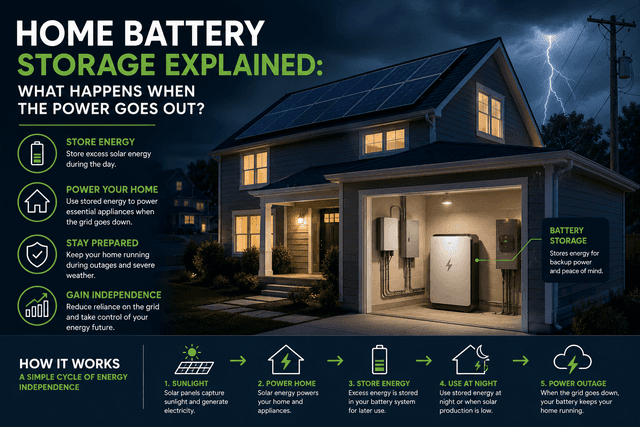
It can be more efficient to design solar and storage together. The installer can plan compatible equipment, electrical routing, controls, permits and system operation as one project. That may reduce duplicated work compared with adding a battery later.
A retrofit can still be practical, but the existing solar system must be reviewed first. Equipment compatibility, available electrical capacity, inverter design, physical space, utility rules and warranty responsibilities can all affect the scope.
Ask for two prices when timing is flexible
If you are considering solar now but might add storage later, ask what a combined project costs and what a future retrofit would require. The comparison can reveal equipment choices or electrical work that are easier to plan at the start.
Battery incentives and tax credits in 2026
Federal tax rules changed. IRS guidance states that the Residential Clean Energy Credit under Section 25D is not allowed for expenditures made after December 31, 2025. Homeowners planning a battery project in 2026 should not assume the former federal residential credit applies.
State, utility or local battery programs may still be available, but eligibility, funding, equipment rules and application steps can change. Some programs may require approval before installation or may pay benefits over time rather than reduce the upfront price.
Verify the current program directly with the administering agency or utility, and speak with a qualified tax professional about personal tax questions. An installer can help identify programs, but the homeowner should understand who receives the incentive, when it is paid and what performance or enrollment terms apply.
Can a solar battery lower your electric bill?
A battery may reduce some grid purchases by storing electricity for later use, but savings are not automatic. The result depends on the utility rate plan, export-credit value, battery settings, charging source and household-use pattern.
Time-of-use rates may make stored energy more valuable during expensive hours. In another utility territory, favorable export credits may reduce the financial advantage of storing energy instead of sending it to the grid. Fixed utility charges may remain either way.
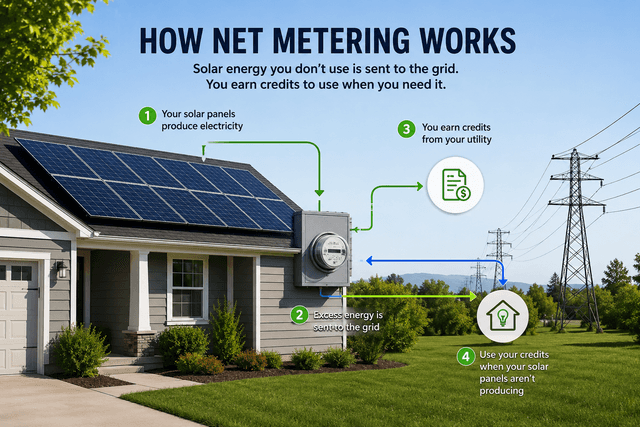
Review how solar credits and net metering work before treating estimated bill savings as part of the battery payback. Ask the proposal to show the current utility rate, expected battery behavior and assumptions behind any savings estimate.
How to compare solar battery quotes
Place each proposal into the same comparison. A low price is not useful if it excludes work or supports a different backup goal.
| Quote item | What to confirm | Why it matters |
|---|---|---|
| Equipment | Model, quantity, usable kWh and power output | Shows what the system can store and support |
| Backup scope | Exact circuits, large-load limits and load controls | Prevents mismatched expectations |
| Installation | Electrical upgrades, permits, labor and commissioning | Reveals exclusions that could raise the final price |
| Warranty and service | Equipment, labor, capacity terms and service contact | Clarifies protection after installation |
| Payment | Cash price, financed total, interest, fees and ownership | Separates a low monthly payment from total cost |
| Incentives | Program, eligibility, recipient and timing | Avoids counting a benefit that may not apply |
If financing is part of the proposal, compare the full amount paid over the term, not only the monthly payment. Trinity’s guide to solar payment options explains how ownership, financing and third-party arrangements differ.
Questions to ask before choosing a battery
- What usable capacity and continuous power will the system provide?
- Which circuits and appliances will it support during an outage?
- Can solar recharge the battery while the grid is down?
- What electrical upgrades, permits and inspections are included?
- What could change the quoted price after work begins?
- Which warranties cover the battery, related equipment, labor and installation?
- Which incentives are current, and who receives them?
- What is the cash price and the total financed cost?
Price the outcome, not only the battery
Start with the loads you want to protect, how long you want to support them and whether daily bill management is also a goal. A home-specific design can then match capacity, power and electrical work to that outcome.
Explore Trinity’s solar battery options and request a project-specific quote that shows the complete installed scope.
The bottom line
A home solar battery is generally a five-figure project, but the useful number is the complete installed price for the backup and energy goals of a specific home. Capacity, power, battery count, electrical work, permits and project timing can all change the total.
Use national benchmarks only for scale. Compare written quotes on the same equipment, loads, installation scope, warranties, incentives and payment terms before deciding.