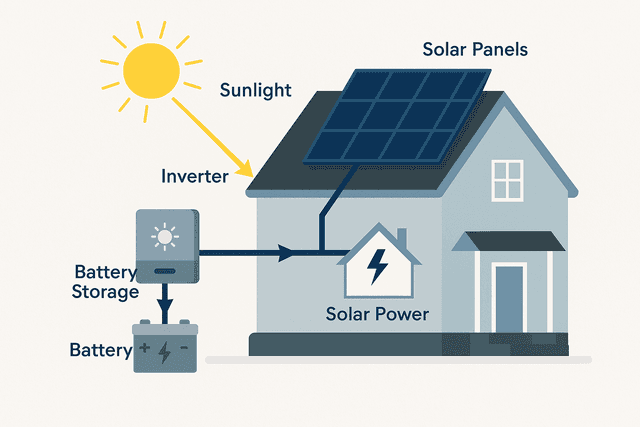
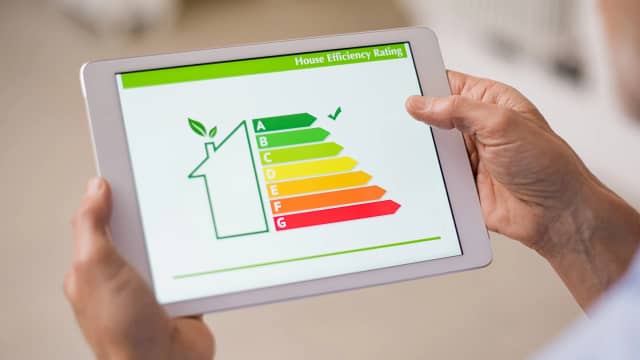
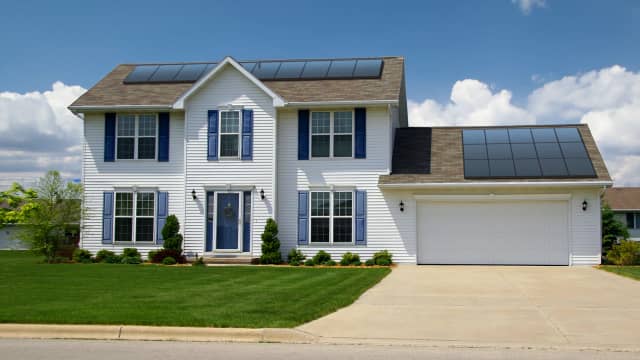
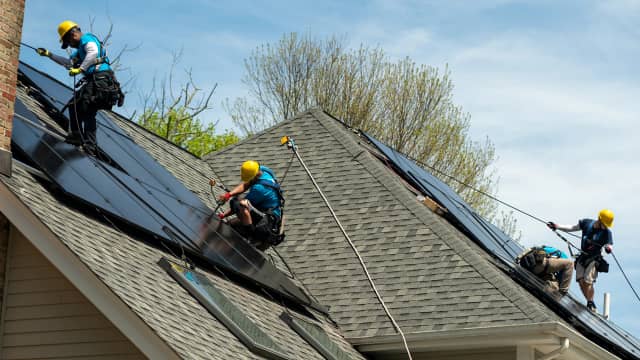
Solar is clean. It’s predictable. It’s modern. But how much does solar actually cost?
The answer starts with the home and how it uses electricity. Here’s how to understand the main cost factors, review potential savings and compare solar proposals.

How much does a solar power system cost?
For illustration, the estimate used in this guide is $24,000–$35,000 for an 11-kW solar system, including permits, equipment and installation. This example is a starting point, not a current quote or a recommendation that every household needs an 11-kW system. The design and price for a specific home may differ.
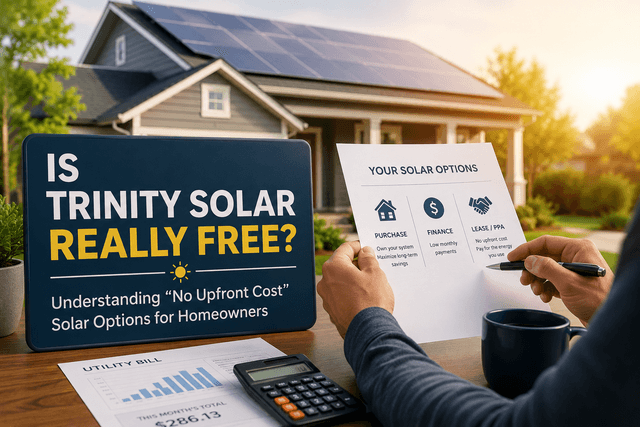
The total system price also differs from the amount due upfront. Depending on the available solar payment options and qualification requirements, going solar may involve as little as $0 out of pocket at the start. Review the complete agreement to understand the payments that follow.
Trinity can tailor a system to the home’s needs and explain the proposed design and cost. A free consultation with a Solar Expert is the starting point.
Section takeaway: Use a general price example to understand the conversation. Use a home-specific design and written proposal to evaluate the actual project.
What affects the cost of going solar?
Several factors shape the proposal. The most useful estimate explains how each applies to the home.
Electricity use and household needs
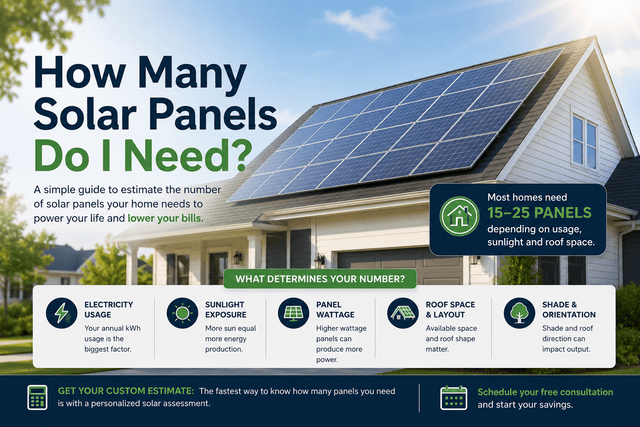
Two homes with similar square footage can use different amounts of electricity. Household size, appliances and daily routines affect energy needs. Reviewing electricity use provides a more useful starting point than judging the system by house size alone.
Usable roof space
The roof affects how many panels can be accommodated and how the system can be arranged. A larger roof may offer room for more panels, but the goal is a design suited to the household’s needs. Trinity uses specialized technology to evaluate the roof’s potential and develop the proposed layout.
System size
System size is one of the main cost factors. More panels generally mean a larger project price and the potential to generate more electricity. Ask how the proposed size relates to the home’s usage and the production estimate.
Location and project requirements
Solar pricing can vary by location. Ask the proposal to explain the installation scope and applicable project requirements rather than relying on a price from a different market.
Payment option
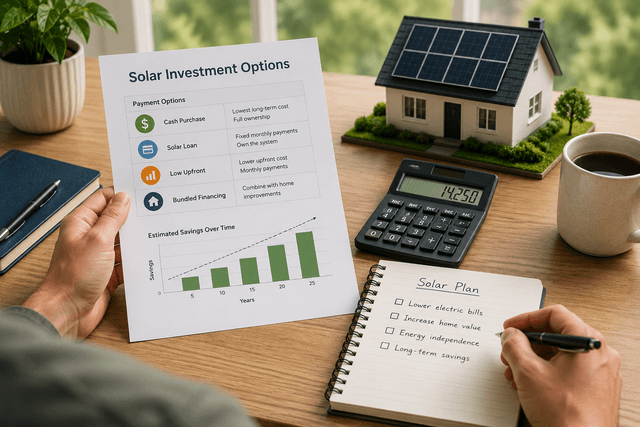
There is no one-size-fits-all way to pay for solar. Compare the upfront amount, ongoing payments, ownership terms and total commitment for the options available. The lowest initial payment does not necessarily identify the lowest overall cost.
Section takeaway: A useful quote connects the system design to electricity use, usable roof space and the payment agreement.
Keep learning: Review Trinity’s solar payment options before comparing proposals.
What can affect solar savings?
Potential incentives and utility credits belong in the cost discussion. Their availability and value depend on the applicable programs and the household’s circumstances.
State incentives
Depending on the state, program rules and selected payment option, incentives may be available. Ask which programs apply to the proposal, who is eligible and whether any conditions or deadlines affect the estimate.
Net metering and utility credits
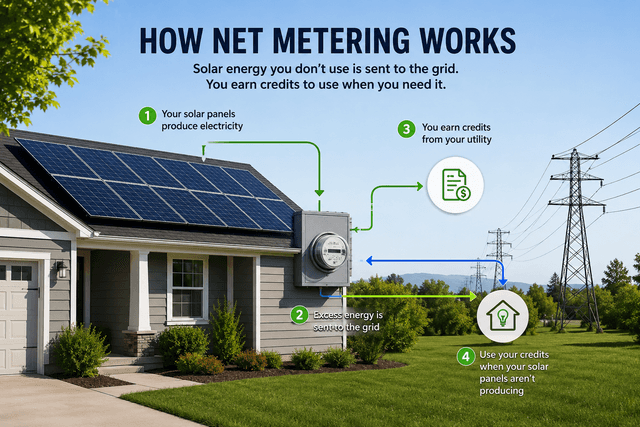
Under applicable net metering or export-credit arrangements, electricity sent to the grid may earn credits on the electric bill. The utility’s rules determine how those credits work. Ask which program and credit assumptions are used in the savings estimate.
Section takeaway: Compare the assumptions behind the savings estimate, not just the headline number.
Keep learning: Explore how net metering works and ask how the local utility’s rules apply.
How to compare solar companies and quotes
Meeting with different companies can help clarify the options. A lower quote may reflect a different system, scope or agreement. Ask what explains the difference before deciding which proposal fits.
- Design: Compare system size, equipment and estimated production.
- Included work: Identify the permitting, installation and other work covered by the price.
- Payment terms: Compare the upfront amount, ongoing payments, term and ownership arrangement.
- Incentives and credits: Check that the proposals use applicable, comparable assumptions.
- Support and coverage: Read the applicable warranty terms and ask who handles service questions after installation.
Section takeaway: Compare equivalent proposals before comparing totals. The design, included work and agreement should explain what the price buys.